Перевод скоро появится!
I tend to go big, make it perfect. Planning and creating a big picture with all the details takes so much energy that there’s little left for execution.
At the same time, when I feel overwhelmed and stressed about all the things I think I want to do, have to do — what helps me is to stop and think. Make a plan, actually. It helps to gain clarity, but at some point I fall into the loop of overthinking/overplanning again.
Planning. The Vice and the Virtue.
So what’s the way out?
The MVP approach
Now I'm experimenting with the "MVP approach".
MVP - Minimum Viable Product
It means making something workable — not perfect — focusing on the main functions or qualities — then shipping it. Or simply: outline the system => try it out.
It’s a very sound advice: “make it good, not perfect”, “done is better than perfect”, etc.
But in moments of overwhelm, it still feels natural to think just a bit deeper, to search just a little more information.
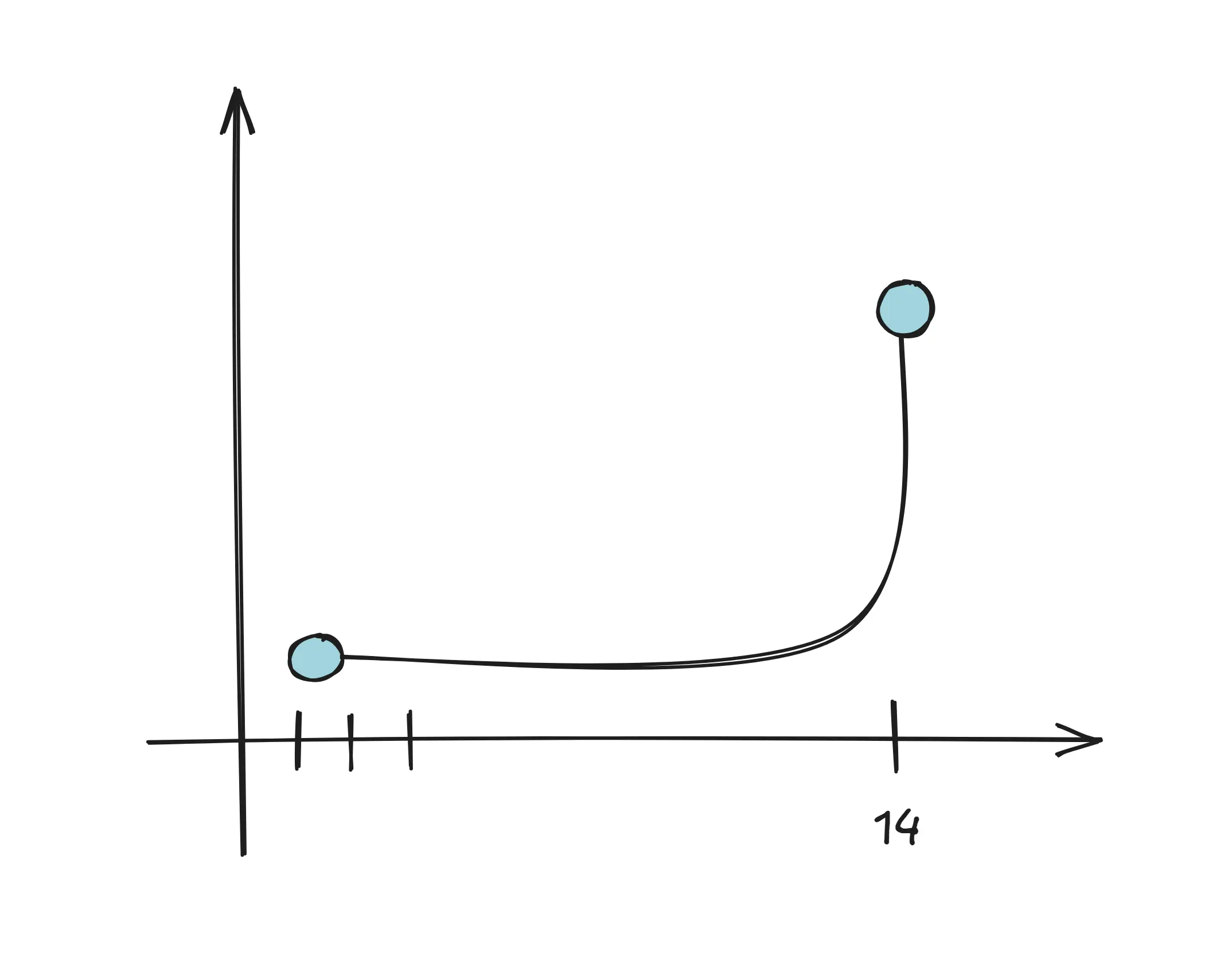
And the effect is almost always the same: the more information I gather, the more overwhelmed I feel. It takes real effort to stop and just do something.
What changed for me
This is how my projects actually appeared on this website. This is how my Planning system and Home Care system got off the ground.
I’m learning to live with unfinished things — with WIP mode.
WIP - Work in Progress
It still puts me in a fight-or-flight state sometimes. But it’s not as bad as I feared. I used to think that if I worked with something unrefined, not perfect-ready yet, then I’d end up in chaos — unfinished systems would wash me over and I’d sink deeper into mess.
It turned out to be the opposite.
First, things actually get done. Second, the sooner I try an idea, the sooner I get feedback on whether it works or not — and what real scenarios look like.
Because this is what happens in thinking mode: you go over different scenarios and refine the system. It’s useful, but limited: you only work with what you can imagine. Reality always adds more once you start using it.
Good systems need time. Active time.
The cycle I follow now
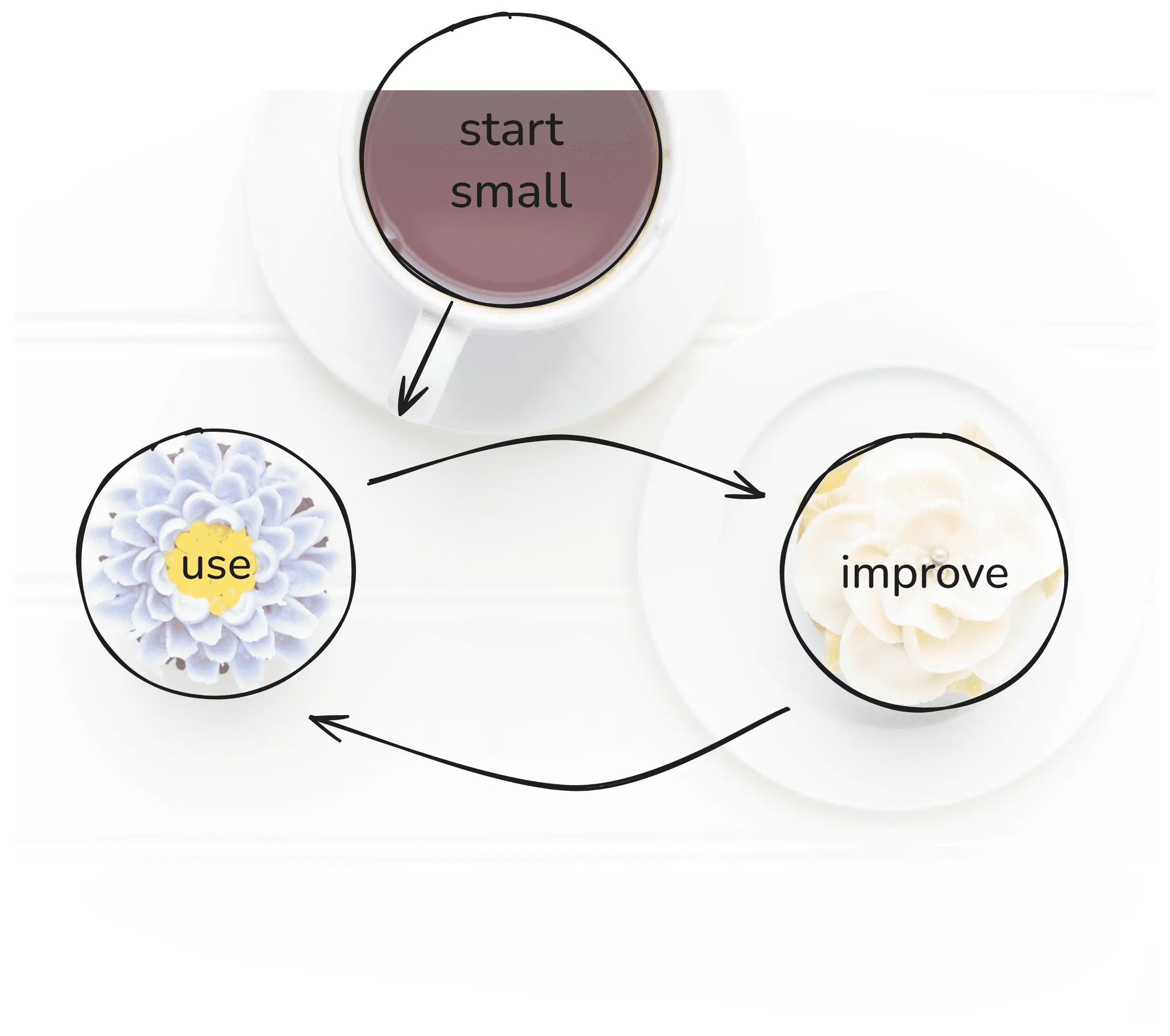
I see the process like this now:
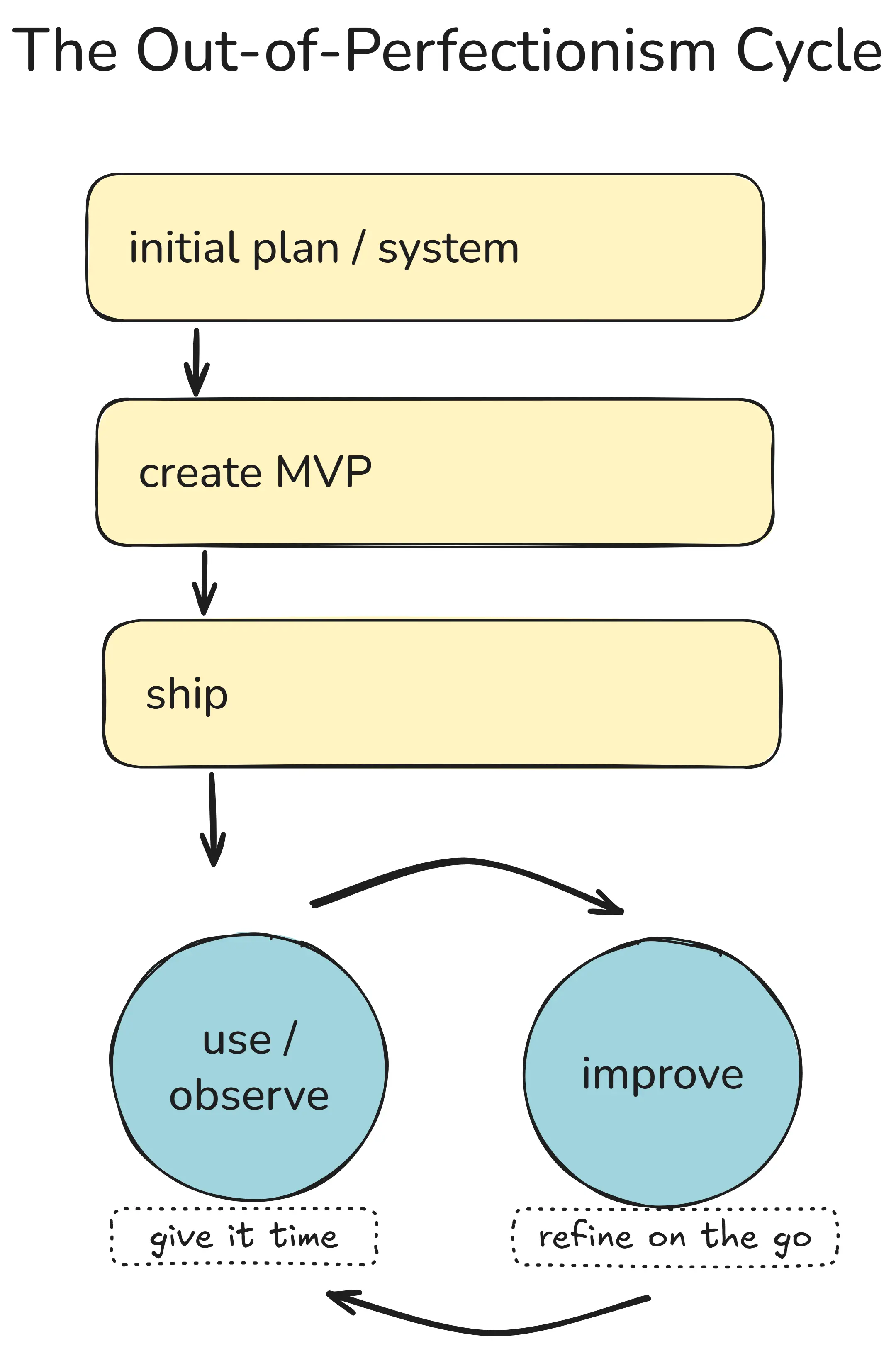
This is how I finally started working on my projects: I listed everything I wanted to build → highlighted the most ready and useful ones → picked the first → made it workable → published it → kept using it (+collected feedback) → improved it (now it lives in a refinement cycle).
It also transferred into my daily life — in systems like keeping my home clean, practicing piano, and building new habits.
I still take time to define a minimum version and do some initial research, but ideally I start the next day with something small already in motion.
- If I assign cleaning zones to each day - I do something in the Kitchen already if today is a ‘Kitchen day’.
- If I outline a piano practice session, I print a few pages and start working through them the next day.
- If I weave new habit into my routine — I test it in the actual time slot immediately and adjust from experience.
- And so on.
The key is simple: start with 2–5 minutes and get the system running.
Questions that help me
- Is it clear what this is about?
- Is it understandable step by step?
- Is the result clear?
- Is it visually acceptable (not perfect)?
- Am I in pressure/obsession, or in a state of creation?
Rules that help me move forward
I find that having an overview or basic system is essential — it gives structure to the movement.
For example:
- Keep a full list of projects. Yet I don’t need complete structures and details for every one of them at once. I only need clarity on the current one.
- Use a simple checklist before shipping/implementing.
- Define a system for refinement (when I come back? and what triggers it?).
- Set clear time boundaries (when I stop working?).
- Use a shutdown ritual (helps with stopping): I write down where I stopped, next tiny step, open questions.
- Make a “future improvements” list to avoid endless tweaking before publishing. It gives closure without perfection.
Final thought
It’s easier to approach task after stepping away, shifting attention — ideally the next day.
Then the task feels less urgent and pressured. I can begin calmly again. With a fresh mind.