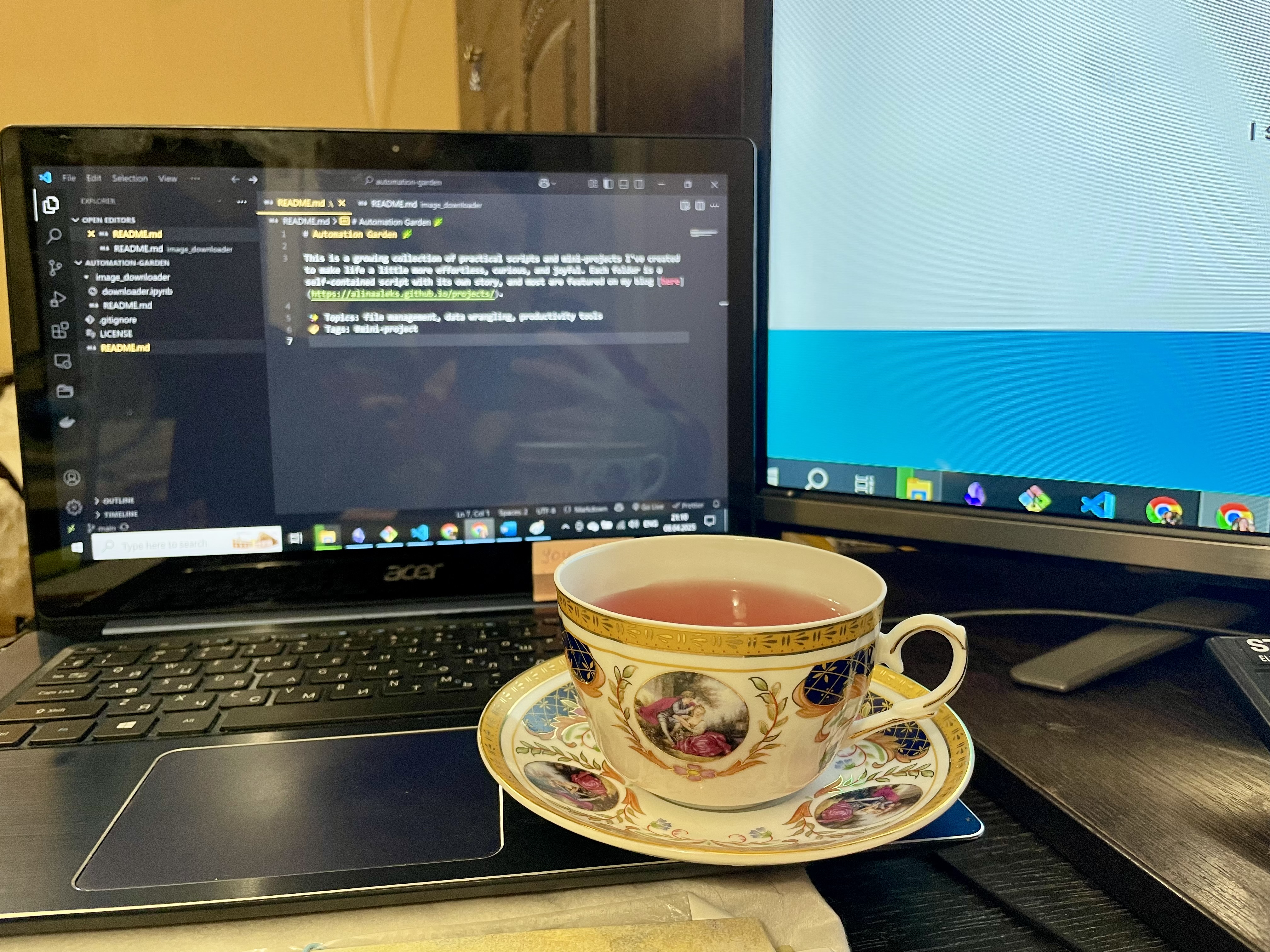
Today I’m wrapped in my cozy robe, sipping hibiscus tea, and about to dive into the past.
Fret not — it’s related to data.
Lately, I often wonder how I, so obsessed with gathering and organizing information, hadn’t discovered Python earlier. I did so much manual work! But maybe I had to go through all those tedious tasks to now understand how to process things better. Still, I’m surprised by how long I remained in the dark.
The Urge to Organize
I’ve been in it for many, many years.
When I was around 18, I found myself surrounded by diaries, notes scribbled on scraps of paper, bookmarks, self-sent emails, Word docs, blog posts, recipes, wishes, plans…
I felt this need to make sense of it all. I wanted it to serve me—to be organized in a way that was
- accessible,
- visually structured,
- logical,
- and clean.
I never understood the idea of collecting information just for collecting information. To let it sit somewhere. 🪑 Why save anything if it’s going to be lost in the clutter? I can feel the heaviness of disorganized information.
Copy, Paste, Repeat. The App-Hopper
I tried countless tools: note-taking apps, calendars, databases, paper journals, diary platforms.
I’ve migrated from one to another so many times, copy-pasting for hours, sometimes weeks. Then I’d find something slightly more efficient—and migrate again. Like a migratory bird with a thing for productivity apps. 🕊️
The longest path I walked was with Notion. About five years.
During that time, I also collected observations on what I’d improve. Now I can only access it through a VPN, and I’m tired of that instability.
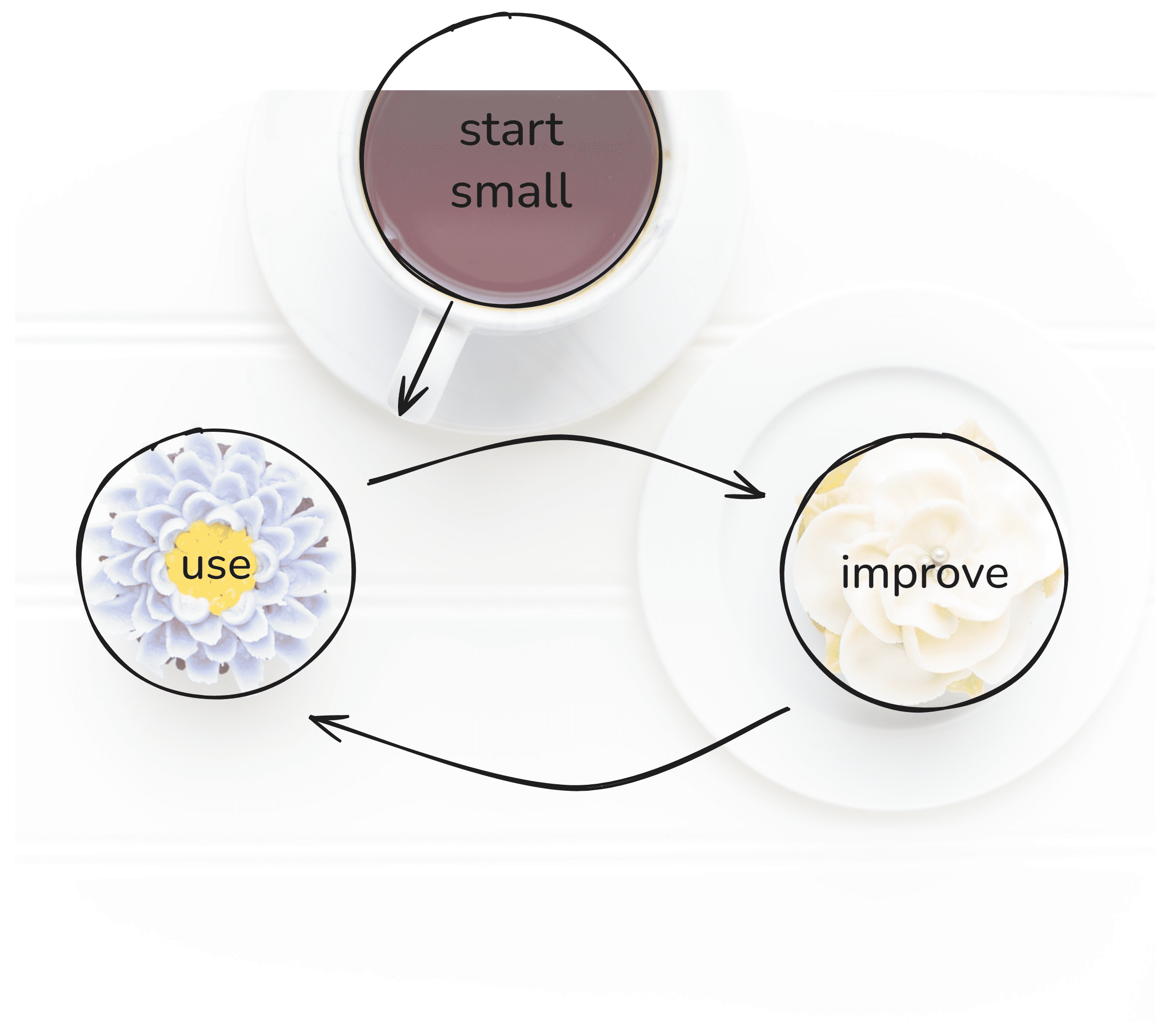
And I guess I just cannot stick to one solution forever. I want improvements. Sense of growth.
I’m not saying the apps are bad because I moved on from them. I truly appreciate the time I spent using them.
Airtable, We Barely Knew Ye
When VPN-issues with Notion became ever more pressing, I started moving to Airtable, and have been using it for barely two months before I hit the upload limit. That, paired with a few other observations, told me I needed a new solution. Migration, ladies and gentlemen! 🕊️
Right now, I’m exploring Obsidian as a new promising path. I’m discovering that it requires a bit of technical touch, and I’m thrilled by it.
Yet I feel that, eventually, I’ll be able to create a tool of my own—a personal app shaped by my needs. Something I’ll refine as I grow. Something I’ll be in full control of.
Python, Thy Name is Delicious!
I think I needed to write all this to honor the long-long road I’ve walked in order to appreciate the new road filled with more efficiency. New era of migration! Yesterday, I was blown away by the efficiency of a simple automation.
I worked with my recipe book. [1 - link below, my recipe book template]
And with just a few lines of Python, I turned my CSV file into .md recipe cards for Obsidian. What previously was a row in airtable became an .md in Obsidian, with unified lines of code for template record.
My bigger concern, though, was transferring images. In the past, I downloaded them manually and would upload them again to each record.
It used to take days.
But this time?
Using the Airtable API, a personal token, and just the basic structure of my table — I downloaded all the images with Python in under five minutes. Yes, I also had to understand the code, test it, tweak it — but the whole process took less than two hours.
Watching those lines — Downloading image.jpg — appear, one by one…
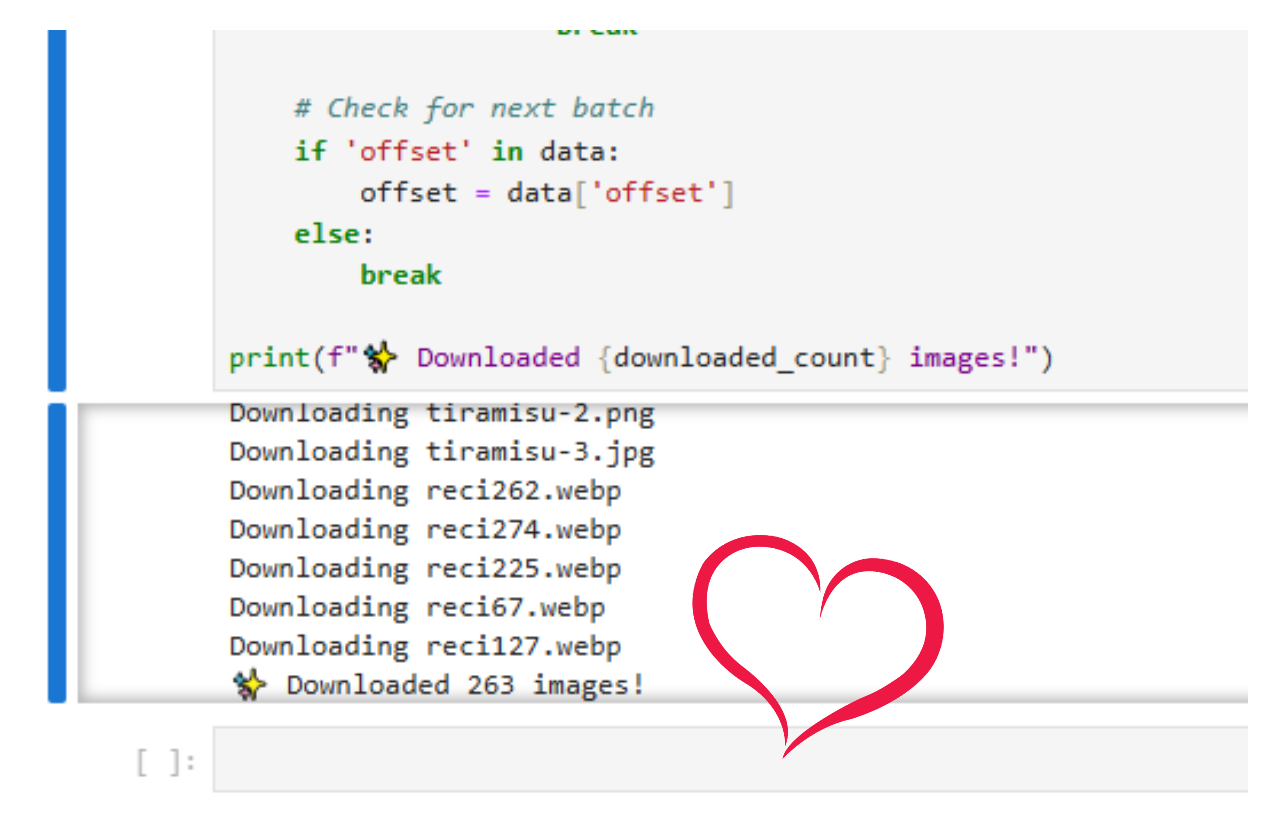
…was such a pleasure to experience!
When you know what it is like to do it manually, you can truly appreciate the beauty of it.
The Next Cup of Tea
I think of refining this script and mapping it out as a mini-project. I imagine I might be coming back to it more than once. [2]
Thank you for a warm chat.

[1] Recipe Book Template
[2] Image Downloader with Python